·
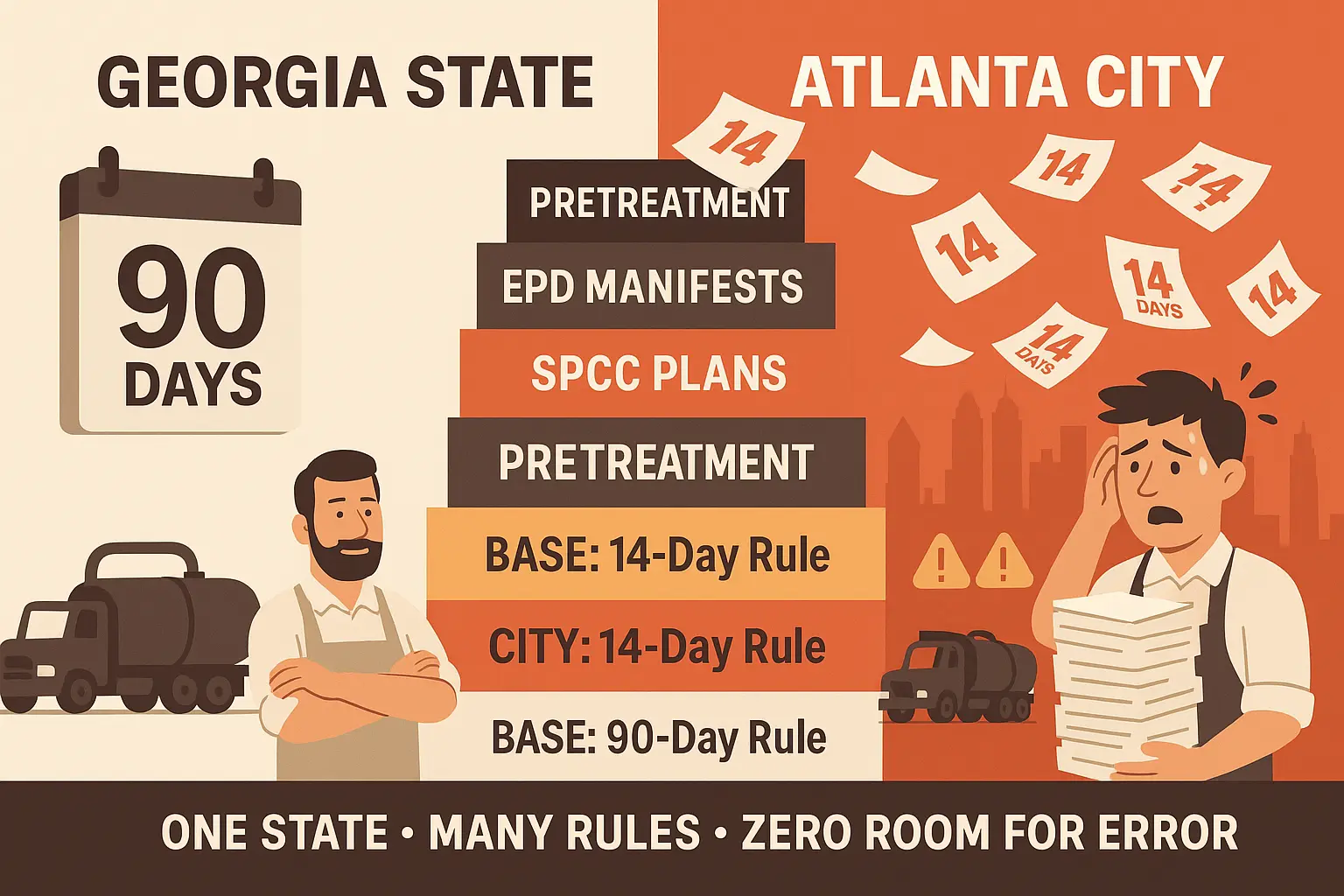
Georgia Grease Rules vs. Atlanta: 90 Day Myth, 14 Day Law
Georgia allows 90 day grease pumping; Atlanta demands 14. See SPCC, EPD, and pretreatment steps to stay compliant and cut surprise fines.
·
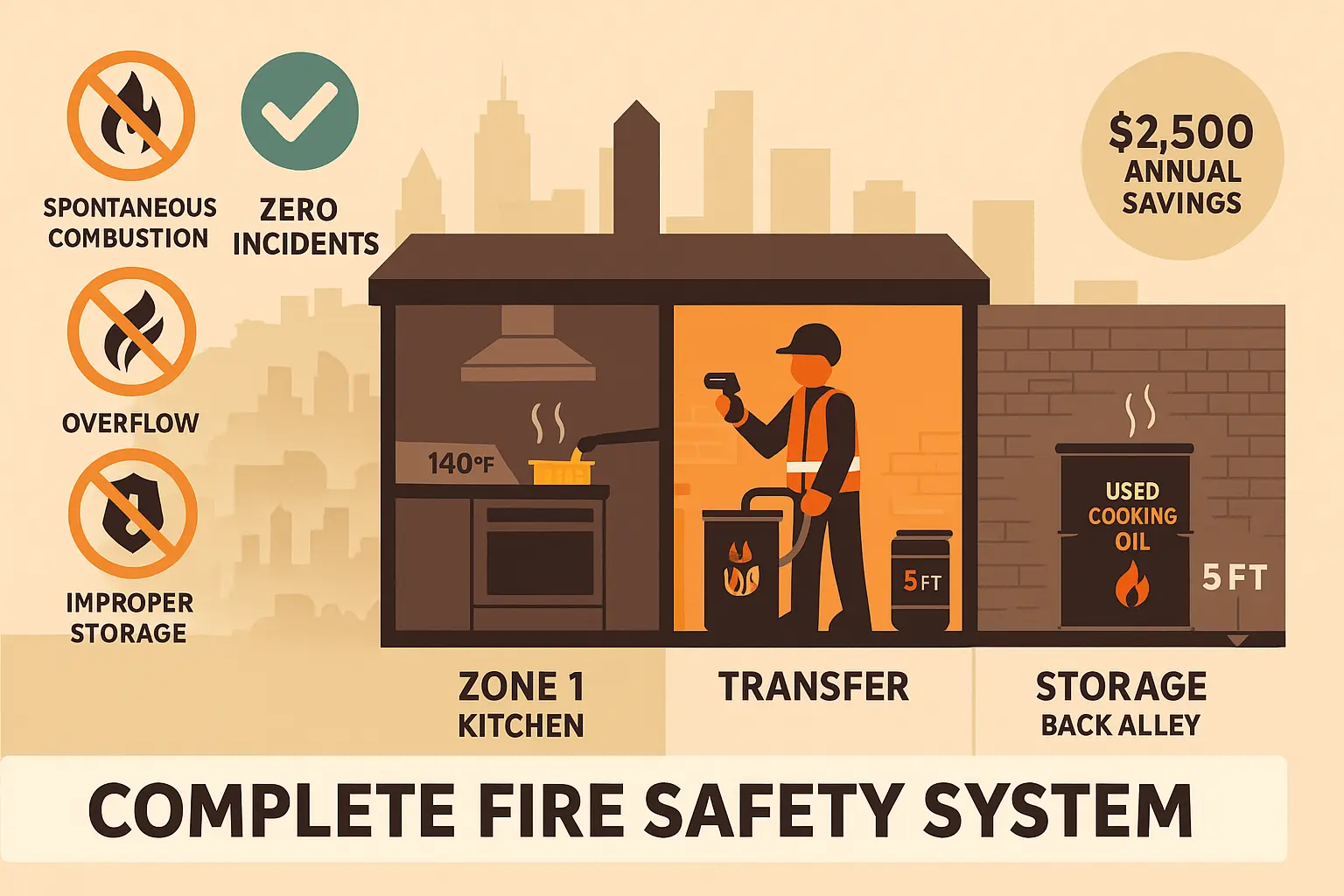
Used Oil Fire Safety for GA Restaurants
Georgia restaurants cut fire risk by cooling oil to 140 °F, sealing UL listed drums away from heat, disposing oily rags nightly, and scheduling prompt Grease Connections pick ups.
·
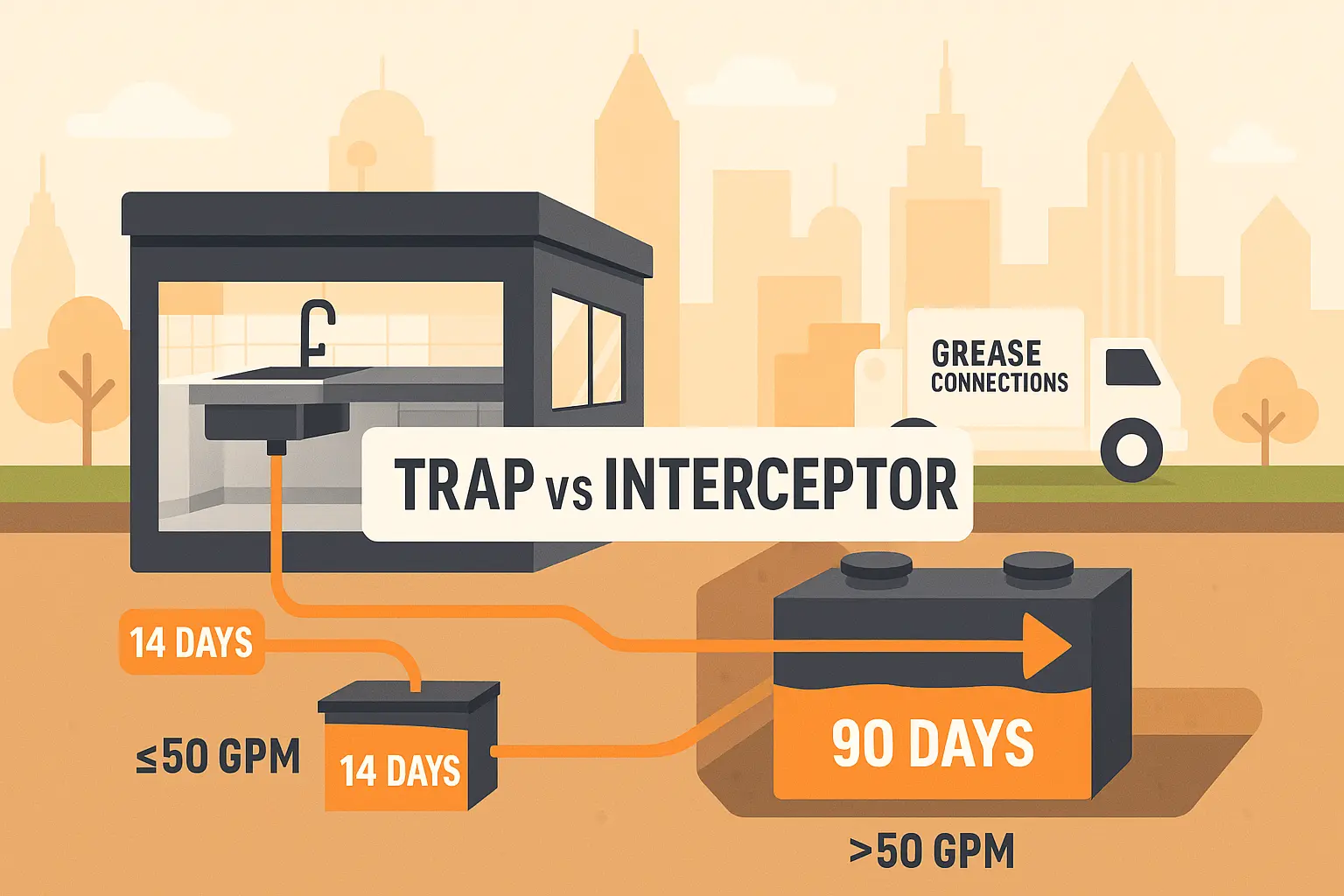
Grease Trap vs Interceptor: Atlanta Code Guide
Explains Atlanta’s code distinctions between grease traps and interceptors, when each is required, sizing, maintenance, and compliance steps for restaurants across Georgia.
·
Marietta Restaurant Grease Management 101
Marietta’s definitive FOG guide 90 day trap rule, 10 day manifest filing, theft deterrents, hauler vetting, fines actionable steps to keep restaurants inspection ready.

·
Atlanta FOG Compliance Checklist
Atlanta restaurants: use this one page checklist to secure permits, pump traps every 90 days, upload manifests to GreaseTrack, and avoid $1,000 a day fines.

·
School Cafeteria Grease Disposal in Georgia
Explains Georgia’s 90 day pump law, budgeting, approved collectors, and class ready recycling projects for school and hospital kitchens.
·
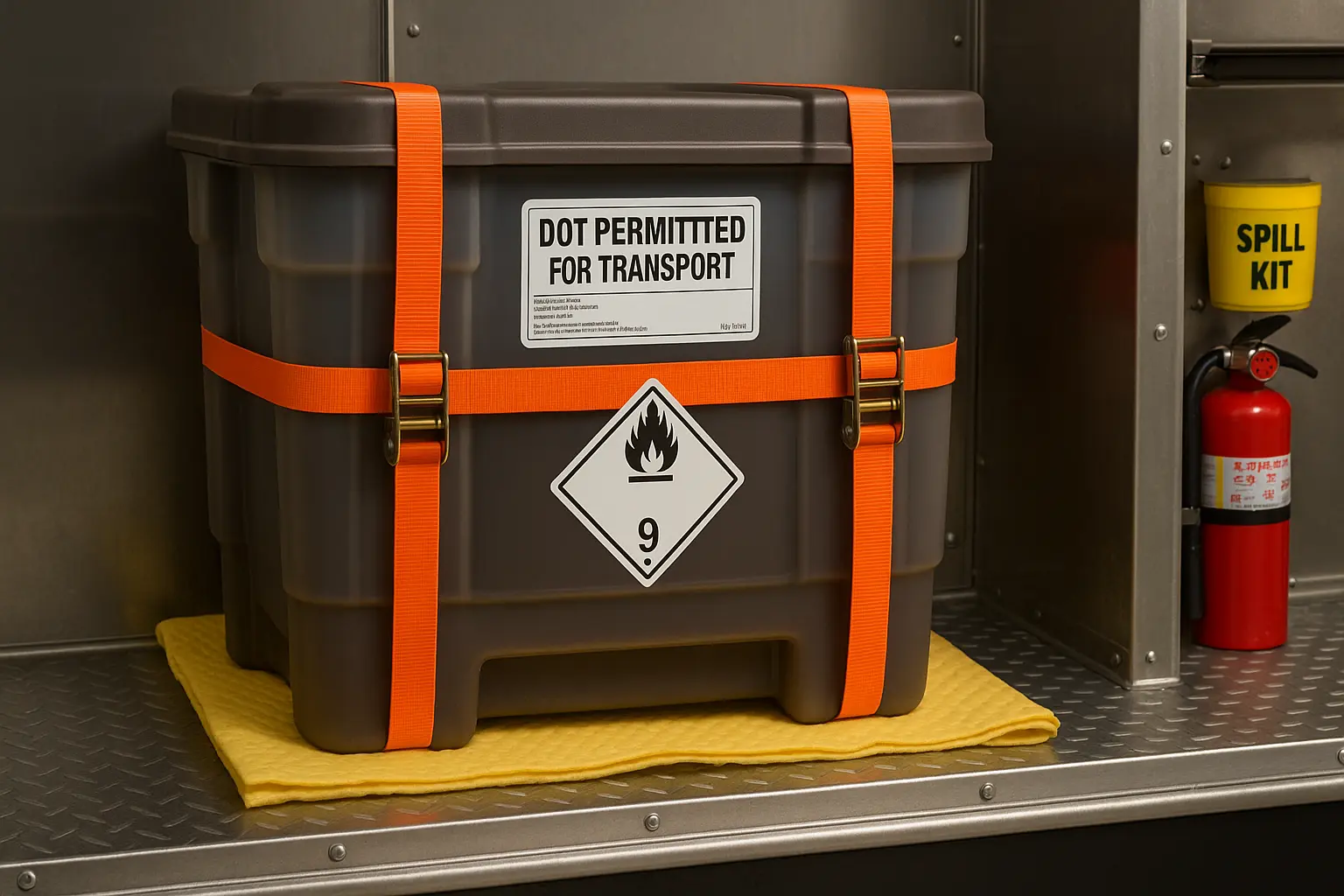
Food Truck Oil Disposal Atlanta a Grease Recycling Guide
Actionable Atlanta guide: rules, drop off sites, mobile safe transport, pickup scheduling, rebates, and penalties for food truck grease disposal.

·
Cooking Oil Theft Atlanta: Protect Your Liquid Gold
Atlanta’s fryer oil crime wave costs eateries thousands. This guide explains local cases, $3 a gallon black market math, Georgia’s $1,500 felony line, and proven safeguards restaurants can implement today.
·
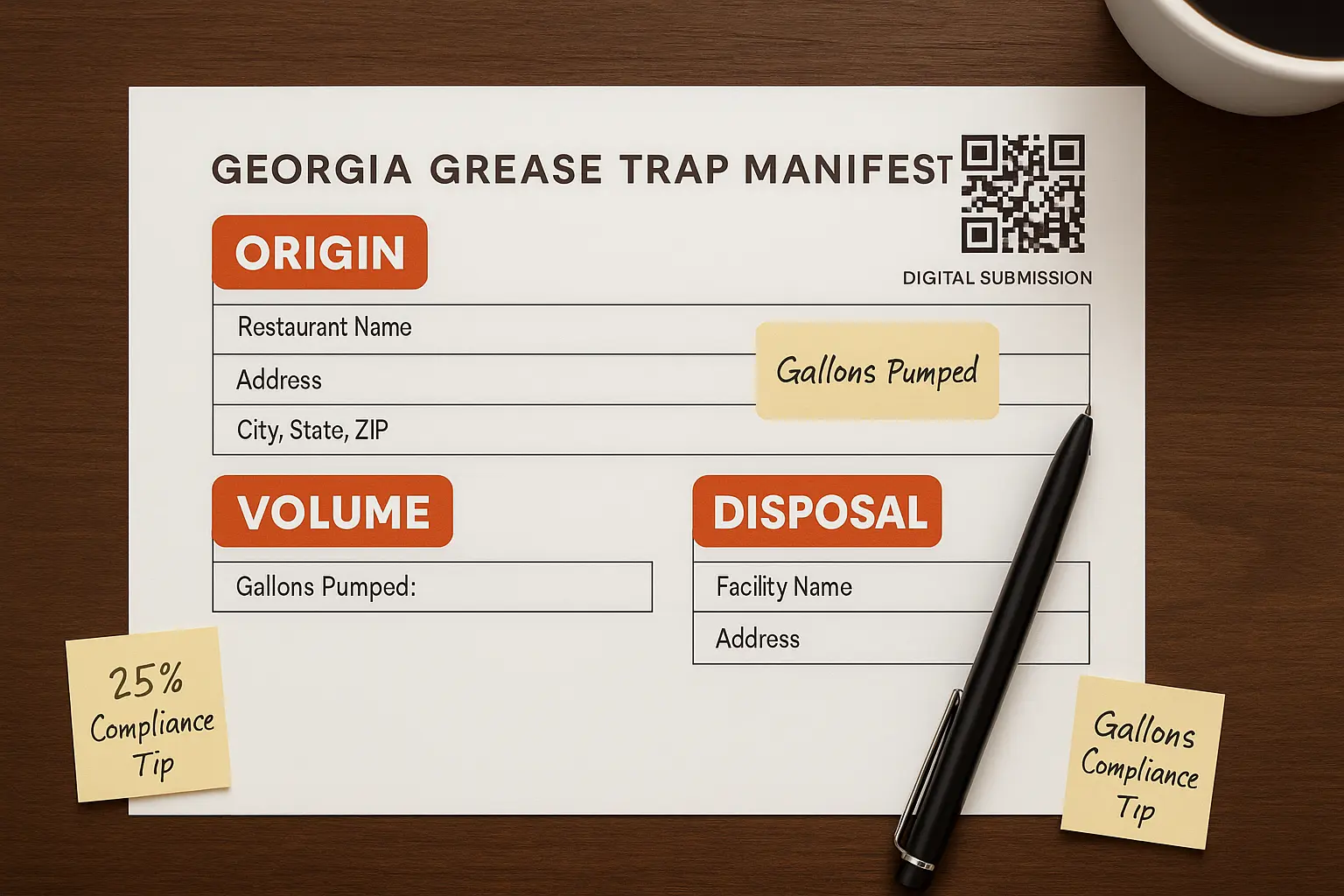
Atlanta Grease Trap Regulations & FOG Compliance Guide
Atlanta FSEs must pump traps on a 14/90 day cycle, follow Rule 391 3 6 .24 manifests, and meet EPA 25 % standard. This guide covers fines, schedules, and best practices.
·
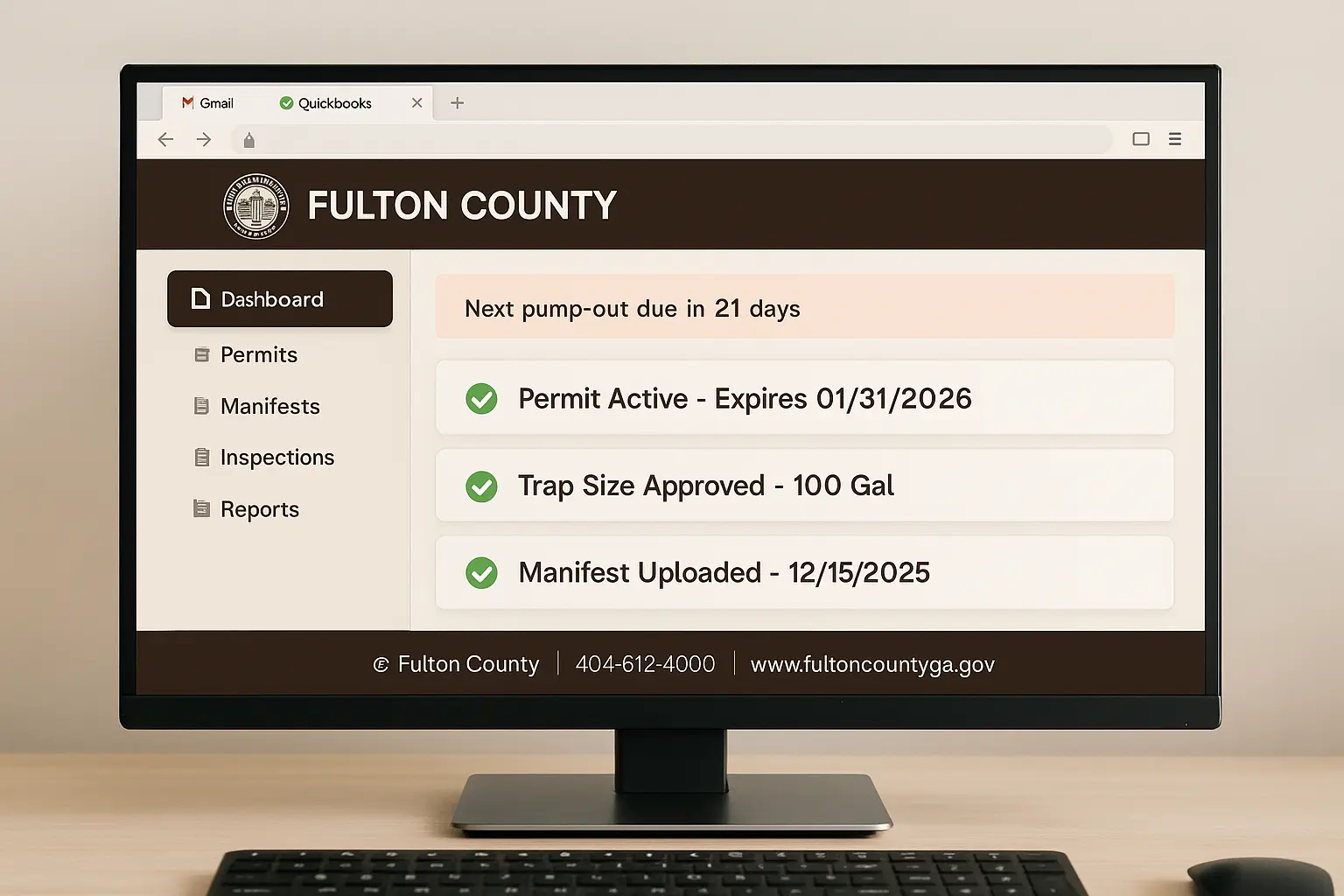
Grease Recycling & Compliance Guide Fulton County
Complete Atlanta restaurant guide to FOG compliance, covering permits, pumping schedules, manifest requirements, theft prevention, and emergency response. Transform grease management from costly risk to profitable revenue stream.
Not Sure If We Cover Your Location? Check Coverage Here →